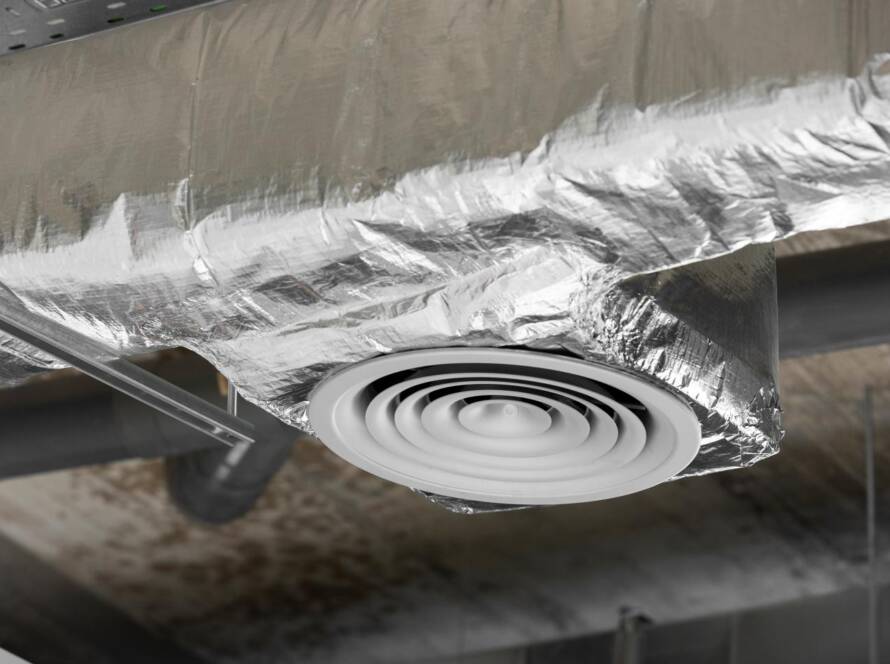


The air from the vents feels warm, the house will not drop below 80 degrees, and the outdoor unit may or may not be running. An AC that is not cooling is one of the most common problems on a hot afternoon, and the cause can be anything from a clogged filter you can fix in two minutes to a failed part that needs a technician. This guide walks through the checks in the order that saves the most time, shows what is safe to do yourself, and explains which problems mean it is time to call for service.
Quick Take
Start with the free checks: thermostat mode and setpoint, the breaker, the air filter and blocked vents. Ice on the indoor coil means turning the cooling off and running the fan to thaw it, then finding out why it froze. Refrigerant leaks, failed capacitors and compressor problems need a licensed technician, and an older unit deserves a repair-or-replace conversation.
Start With the Thermostat and the Breaker
Most homeowners skip the simplest checks, and they fix more calls than any part. Confirm the thermostat is set to Cool, not Fan or Heat, and set the temperature at least 3 degrees below the current room temperature so the system has a reason to start. If the screen is blank or dim, replace the batteries.
Then look at the breaker panel. The outdoor unit is usually on a double breaker. If it has tripped, reset it once. If it trips again, stop there. A breaker that keeps tripping points to an electrical fault such as a failing capacitor or compressor, and resetting it over and over can make the damage worse.
Check the Air Filter and the Vents
A clogged filter is the most common reason an AC stops cooling well. It cuts the airflow across the indoor coil, so the system runs longer, cools less and can freeze up. A standard 1-inch filter often needs replacing every 30 to 45 days in heavy use, and a thicker media filter every 3 to 6 months. During the cooling season, check it monthly.
Look at the vents too. Open the supply registers, and clear furniture, rugs and boxes from the return grilles. Closing off rooms to save energy does not help a central system, because it restricts airflow and can push the same problem back onto the coil.
Look at the Outdoor Unit
Step outside while the system is running. The fan on top of the condenser should be spinning, and you should hear a steady hum from the compressor. If you hear humming or clicking but the fan is not moving, a failed capacitor is a likely cause, and that is a job for a technician.
Check the area around the unit. Leaves, cottonwood fluff, grass clippings and plants too close to the cabinet block the air the condenser needs to release heat. Keep about two feet of clear space on every side. If the fins look matted with dirt, turn the power off at the disconnect first, then rinse them gently with a garden hose from the outside. Do not use a pressure washer, because it bends the fins.
Ice on the Indoor Coil or the Refrigerant Line
Frost on the indoor coil or on the larger copper line near the outdoor unit is a clear warning. Ice blocks the airflow, the vents blow weak and warm air, and the system can no longer cool the house.
If you see ice, set the thermostat to Off and switch the fan to On. Let it thaw for 30 to 90 minutes. Do not chip the ice with a tool or use a heat gun, because both can damage the coil. Ice is a symptom, not the problem. The usual causes are restricted airflow from a dirty filter, a low refrigerant charge or a weak blower motor. If it freezes again after a thaw and a new filter, call for service.
Causes That Need a Technician
Some problems cannot be solved with a filter or a hose. These are the ones that need testing equipment and, in most cases, a licensed technician.
| Problem | What you may notice | Typical national cost |
|---|---|---|
| Failed capacitor or contactor | Outdoor unit hums or clicks, but the fan or compressor will not start | $150 to $300 |
| Refrigerant leak | Ice on the coil, a hissing sound, or cooling that gets worse over weeks | $400 to $1,200 for leak repair and recharge |
| Failed compressor | Outdoor unit runs hot, trips the breaker or will not start even with a new capacitor | $1,500 to $3,000 |
| Dirty condenser coil | Slow cooling on hot days and higher bills | Professional cleaning |
These are typical national ranges, not a quote, and local prices vary. A fair price comes after the technician finds the actual cause. Low refrigerant also means a leak, because an AC is a sealed system. Topping it off without finding the leak only delays the next failure.
How to Tell Whether the Air Is Cool Enough
A simple test shows whether the system is performing. Put an inexpensive thermometer in the return grille and another in the nearest supply register after the AC has run for about 15 minutes. A healthy system typically cools the air by roughly 16 to 22 degrees. A difference of less than about 14 degrees suggests the system is underperforming, and more than 22 can point to low airflow. Write down both numbers, because they help a technician narrow the cause quickly.
Repair or Replace an AC That Stopped Cooling
Age and the type of failure decide this. If the unit is under about 10 years old and the problem is a capacitor, a contactor or a dirty coil, repair is usually the sensible choice. A compressor replacement on a system past 10 years often costs close to a new system, and a unit that still runs on R-22 refrigerant, which has been phased out, deserves a harder look.
Ask the technician for both numbers: the repair and the cost of replacement. Our AC repair team diagnoses the cause first and gives you one price before work starts, and our AC installation page explains what a replacement involves if the repair does not make sense.
What Not to Do When Your AC Stops Cooling
- Do not keep running a frozen system. It strains the compressor and makes the damage more expensive.
- Do not add refrigerant yourself. Handling refrigerant requires certification, and adding it does not fix the leak that caused the loss.
- Do not pressure wash the condenser. It bends the fins and reduces airflow.
- Do not keep resetting a breaker that trips. Repeated trips mean an electrical problem that needs a technician.
Keep It From Happening Again
Many no-cool calls trace back to things a spring tune-up would have caught: a weak capacitor, a dirty coil, a low charge or a clogged drain. Our guide to the AC maintenance checklist lists what a professional visit covers, so you know what you are paying for. Between visits, change the filter on schedule and keep the outdoor unit clear.
Frequently Asked Questions
Why is my AC running but not cooling?
The most common causes are a dirty filter, blocked vents, a frozen coil, a dirty outdoor unit or a low refrigerant charge. Check the filter and the outdoor unit first, then call a technician if the air is still warm.
Why is my AC blowing warm air?
Warm air usually means the outdoor unit is not releasing heat or the refrigerant cycle is not working. A tripped breaker, a failed capacitor, a dirty condenser coil or a refrigerant leak can all cause it.
How long does it take for a frozen AC to thaw?
With the cooling off and the fan set to On, a frozen coil typically thaws in 30 to 90 minutes. Do not chip the ice, and have the cause checked if it freezes again.
Can I add refrigerant to my AC myself?
No. Handling refrigerant requires certification, and a system that is low on refrigerant has a leak that needs to be found and repaired first.
How much does it cost to fix an AC that is not cooling?
It depends on the cause. A capacitor or contactor repair typically runs about $150 to $300, a refrigerant leak repair $400 to $1,200, and a compressor $1,500 to $3,000. We diagnose first and give you one price before work starts.
Ready to Get Started?
Warm air in July should not wait. Contact Us at Reliable Heating & Air for a clear diagnosis and one honest price.